Beige Covers, Big Feelings: Why Your Bookshelf Is Now a Personality Test
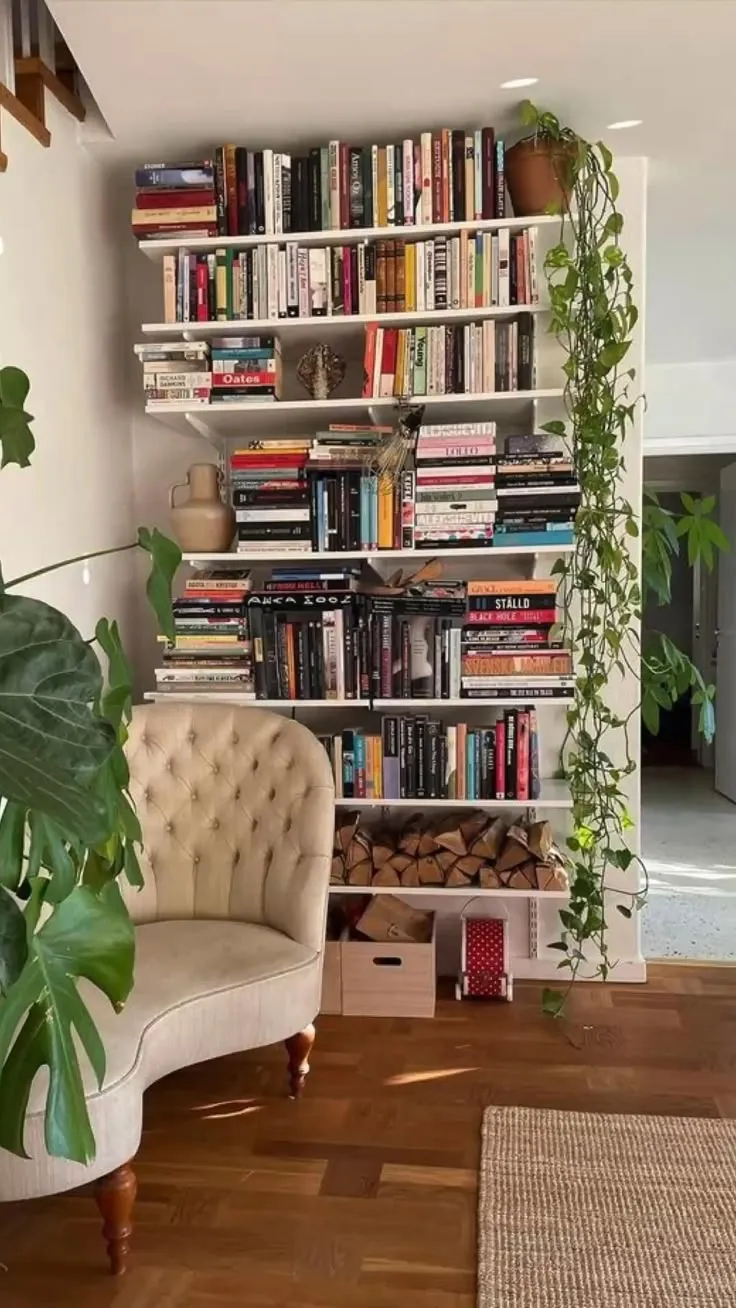
Photo: aesthetic home bookshelf styling with neutral tones and plants, via i.pinimg.com
Scroll through any corner of the bookish internet and you'll see it: shelves styled like magazine spreads, color-coordinated spines, a copy of a certain Russian classic propped artfully next to a latte. Somewhere along the way, books stopped being just things we read and became things we display — mood boards with pages. Predictably, people are upset about it. We're here to make the unpopular case that this is mostly fine. Possibly even good.
The Accusation, Stated Fairly
The critics have a point worth hearing. If you're buying books purely to signal taste — to perform literacy rather than practice it — that's a little hollow. There's something genuinely funny about a shelf of unread classics arranged by cover tone. And when the image of reading matters more than the reading, everyone loses something real.
But let's be honest about what's actually happening on those shelves. A lot of it isn't fake. It's aspiration. And aspiration, in reading, has always been the entry point.
Nobody Falls in Love With Reading Because of a Plot Summary
Here's the thing the purists forget: nobody's origin story starts with discipline. It starts with a hook — a gorgeous cover, a friend's enthusiasm, a movie poster, a vibe. The bookish teen of the 1980s bought paperbacks because they looked cool. The 2020s version buys them because they photograph well. The mechanism is identical; only the camera changed.
A book on a shelf is a promise you haven't kept yet. Some of those promises expire unread, sure. But plenty get kept — usually on a rainy Sunday when you've run out of options and the pretty spine is right there. Decor is a lottery ticket for a reading habit, and the odds aren't bad.
The Democratization Nobody Mentions
There's also a class critique hiding in the anti-aesthetic discourse, and it cuts the other way. For decades, literary culture policed who belonged. You had to have read the right things, in the right order, and be ready to prove it. Aesthetic-first reading culture, for all its flaws, is radically open. Nobody quizzes you on the plot. You're in if you show up. A generation discovering Donna Tartt through a mood board is still a generation discovering Donna Tartt.
How to Turn the Aesthetic Into an Actual Habit
If your shelf is doing more curating than you are, here's how to close the gap — no guilt required.
The one-in-one-out rule. Before buying a new beautiful book, finish one from the shelf. It converts display pressure into reading momentum.
Keep a 'currently reading' stack, not a 'someday' wall. Pull three to five books off the shelf and put them somewhere you actually sit. Visible, reachable, low commitment.
Read the first twenty pages tonight. Not a chapter, not a whole book. Twenty pages. Most aesthetic picks are genuinely good books — that's often why they became aesthetic. Twenty pages will tell you if this one's yours.
Let the cover lie to you a little. Some of the best reading experiences come from books that look like one thing and turn out to be another. The pastel-covered novel that wrecks you emotionally? Peak content.
Match the book to the mood, not the grid. If the shelf says cozy autumn and your brain says unhinged thriller, listen to your brain. Aesthetic gets you to the shelf; mood keeps you turning pages.
The Verdict
Reading for the aesthetic isn't the enemy of reading. It's the lobby. Some people walk through and never go further, and some find their favorite book of all time because it matched their throw pillow. At BookSurf AI, we'll take any door into a book — painted pink, filmed vertically, or dog-eared beyond recognition. The reading is what counts. Everything else is just really good packaging.