When Hollywood Gets Hold of Your Favorite Book: The Strange Magic (and Occasional Heartbreak) of Adaptations
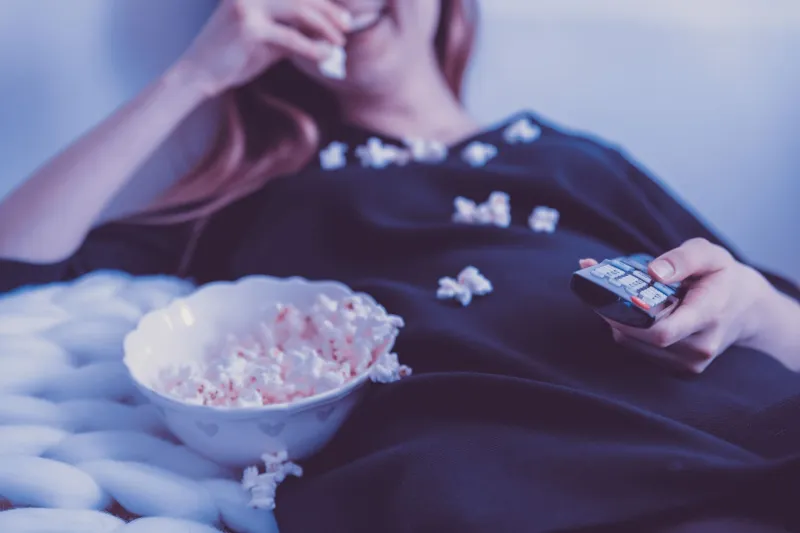
You read the book years ago. Maybe in high school, maybe on a summer road trip, maybe during that weird winter when you were completely in your head and needed somewhere else to be. You loved it. You forgot about it. And then — boom — it's a Netflix series with a prestige cast and a moody trailer that's all over your feed.
So you watch it. And something shifts.
Maybe the show is brilliant and you're suddenly desperate to crack the spine of the original again. Maybe it's a disappointment so thorough that you feel weirdly protective of the book, like someone messed with something that belonged to you. Either way, you're not the same reader you were before you hit play. That's the adaptation effect, and it's stranger and more powerful than most of us give it credit for.
Your Brain Already Wrote the Screenplay
Here's something worth sitting with: when you read a novel, your brain doesn't just process words. It builds. It casts actors, designs sets, chooses lighting. The version of Dune or Daisy Jones & The Six or The Handmaid's Tale that lives in your memory is a full production — your production — assembled from your own imagination and life experience.
When an adaptation arrives, it doesn't just retell the story. It overwrites your version. Psychologists call this the "misinformation effect" — new visual information can actually replace older mental images, even ones you've held for years. That's why so many readers come out of a movie adaptation saying things like, "I can't picture the character the way I used to." It's not dramatic. It's just how memory works.
The flip side? Sometimes the screen version hands you something your imagination never quite managed. A landscape rendered perfectly. A performance that makes a character click in a way they never fully did on the page. That's when an adaptation becomes a gift.
The Re-Read Question Nobody Talks About Enough
After watching an adaptation, you've basically got three options: re-read the book, avoid it entirely, or pick up something new. And the choice you make says a lot about your relationship to the story.
Re-readers tend to fall into two camps. The first group goes back to the source material almost defensively — they want to reclaim their original experience, to remind themselves what the story actually was before Hollywood got involved. The second group re-reads because the adaptation lit something up again. They want more of the world, more of the interiority that a screen can never fully capture, more of the author's actual voice.
Both are completely valid. But there's also a third move that doesn't get enough credit: using the adaptation as a launchpad into something completely different.
If you just binged a slow-burn literary thriller that got adapted into a prestige drama — say, something in the vein of Sharp Objects or Big Little Lies — that emotional residue doesn't have to send you back to the same book. It can send you forward, into a new one that hits the same nerves.
When the Show Is Better (Yes, We're Going There)
Let's be honest about something that book lovers don't always want to admit: occasionally, the adaptation genuinely improves on the source material. Some novels are so interior, so reliant on a narrator's voice, that they don't translate — they transform. And the transformation can be an upgrade.
The TV version of The Americans wasn't based on a novel, but shows like Normal People and Fleabag — both rooted in written work — became cultural touchstones partly because the screen medium gave the stories something the page couldn't: physical presence, silence, a held gaze that lasts three seconds too long.
When that happens, it's worth asking yourself: what is it about the visual version that landed harder? Was it pacing? Performance? The way music filled a scene? Understanding what moved you in the adaptation can tell you a lot about what you actually want from your reading life right now — and that's genuinely useful information.
When the Adaptation Makes You Protective of the Book
On the other side of the coin: sometimes a movie or show makes you love the book more fiercely than you ever did before, precisely because the adaptation missed something essential.
Maybe the film flattened a complex character. Maybe it cut the subplot that was secretly the whole point. Maybe the ending was changed to be more palatable, and you're sitting in the theater feeling vaguely betrayed on behalf of an author you've never met.
That protectiveness is real and it's worth leaning into. It usually means the book did something to you that you haven't fully processed — and that's a great reason to go back and re-read with fresh eyes. You'll notice things you missed the first time. You'll appreciate the choices the author made more consciously. The failed adaptation, weirdly, becomes a kind of literary criticism that helps you read more carefully.
Using AI to Navigate the Page-to-Screen Gap
This is where smart book discovery tools can genuinely change your reading experience. Because the question after an adaptation isn't always "should I re-read this book?" Sometimes it's "what do I read next that gives me this same feeling, without the baggage of the adaptation still rattling around in my head?"
AI-powered recommendation systems — like what we're building here at BookSurf AI — are particularly good at reading between the lines of what you loved. Did you love the slow dread of a psychological thriller adaptation? The complicated family dynamics of a literary drama? The immersive world-building of a fantasy series? Those emotional and structural fingerprints can point toward books you've never heard of that scratch exactly the same itch.
The other thing AI does well: it doesn't care about the hype cycle. When a big adaptation drops, the discourse gets loud and narrow — everyone's talking about the same five books in the same genre. A good recommendation engine can cut through that noise and surface something quieter, something that matches your actual taste rather than the cultural moment.
The Adaptation as a Door, Not a Destination
Maybe the most useful way to think about any book-to-screen adaptation is as an entry point rather than a verdict. It's not the final word on a story. It's one interpretation — one reader's (or director's, or showrunner's) vision of something that was always bigger than any single version of it.
If the adaptation moved you, wonderful. Go back to the book, or ride that feeling into something new. If it disappointed you, that's useful data too. It means you have a clear sense of what the story meant to you — and that clarity is exactly what good book discovery is built on.
The wave doesn't stop at the screen. It just changes shape. The trick is knowing how to surf it.