Same Book, Completely Different Story: What Happens When You Hit Play Instead of Turning the Page

The Book That Wasn't for You (Until It Was)
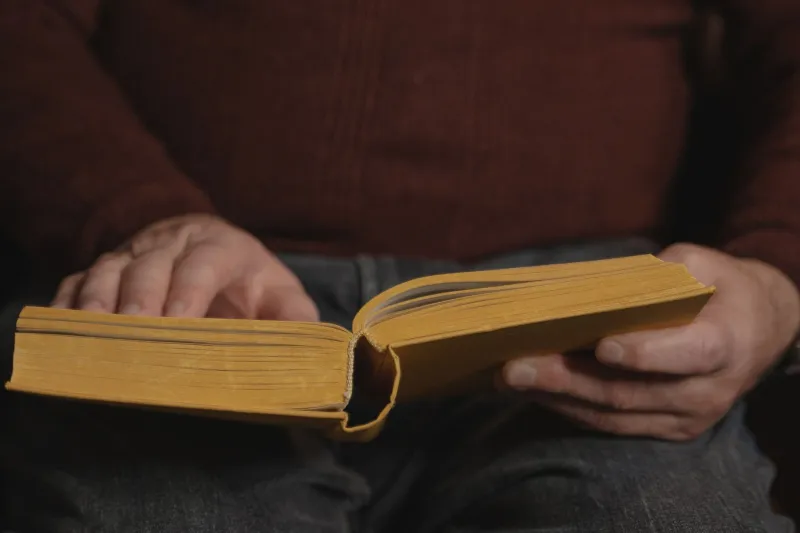
Maybe you picked it up because everyone was talking about it. You made it through a few chapters, felt nothing, and quietly shelved it. Happens to the best of us. But here's a question worth sitting with: did you read that book, or did you just encounter the text?
There's a real and growing conversation among readers about format — not just what you read, but how you take it in. And audiobooks, once dismissed as the lazy reader's shortcut, are increasingly being recognized as a fundamentally different experience. Not lesser. Not greater. Just different in ways that actually matter.
This isn't about defending audiobooks to the people who still insist they don't count. It's about something more interesting: the very real possibility that a book you bounced off of on the page could become one of your all-time favorites through your ears.
What a Human Voice Actually Does to a Story
When you read silently, your brain supplies a voice — usually some neutral, internal monologue that's basically just you. It's familiar, efficient, and completely stripped of performance. There's nothing wrong with that. But it also means every character, from the grieving widow to the fast-talking con artist, gets filtered through the same vocal register.
A skilled narrator blows that wide open.
Timing, breath, hesitation, emphasis — these are narrative tools that don't exist on a printed page. When a narrator pauses before delivering a line, they're doing something an author can only gesture at with punctuation. When a voice actor shifts into a character's accent or slows down for an emotionally heavy passage, they're making interpretive choices that shape your understanding of the story at a level below conscious thought.
Research into multisensory processing backs this up. Auditory storytelling activates different parts of the brain than visual reading — areas connected to social cognition, emotional memory, and even physical sensation. Basically, your brain treats a heard story more like a lived experience. That's not nothing.
Pacing Is Everything, and Narrators Control It
One of the most underrated things a narrator does is manage pacing — and pacing is often the invisible reason a book doesn't land for someone.
Have you ever read a novel that felt slow, then watched someone else absolutely devour it? Chances are your reading rhythm and the book's natural rhythm were out of sync. Some books are written to be absorbed slowly, with long, winding sentences that reward patience. Others have a staccato urgency that gets lost when you're skimming. On audio, you don't get to accidentally rush through the parts that need room to breathe.
A good narrator essentially becomes a co-author in that sense. They've studied the text, found its heartbeat, and they're guiding you through it at the pace the story was meant to move. For readers who tend to skim or speed-read — and a lot of us do — that external control can be the thing that finally lets a book land.
The Format Gap That AI Recommendations Are Starting to Close
Here's where things get interesting from a book discovery standpoint.
For years, recommendation engines — including the early, blunter versions — treated format as an afterthought. The algorithm knew you liked literary fiction with unreliable narrators and dark humor, so it served you more of that. Great. But it didn't know that you absorb literary fiction better at 8pm on a walk with your earbuds in, or that you've never actually finished a book you read on your phone but you've crushed twelve audiobooks in the last six months.
Smartest modern recommendation platforms are starting to factor format preference into the equation, and it's genuinely changing what gets surfaced. If your listening history skews toward first-person narratives with strong, distinct voices, that's meaningful data. It suggests you're not just a reader — you're a listener, and those two things don't always want the same books.
At BookSurf AI, format is part of how we think about the whole picture of what you'll connect with. Because recommending the right book in the wrong format is kind of like recommending a great restaurant and forgetting to mention it's a four-hour tasting menu when you only have forty-five minutes.
When the Narrator Is the Book
Some audiobooks transcend the source material — and some readers will tell you, almost guiltily, that they prefer the audio version to the print. This is especially true for memoirs and essays, where the author narrates their own work.
Hear Michelle Obama read Becoming, or Matthew McConaughey stumble through his own weird, wonderful logic in Greenlights, and you're not just getting the text. You're getting the person. The inflections, the self-interruptions, the places where they clearly had to stop and collect themselves — that's intimacy a printed page can't manufacture.
But it works for fiction too. The audiobook for The Hitchhiker's Guide to the Galaxy read by Stephen Fry has a cult following that's entirely separate from the book's own fanbase. Listeners will tell you it's not just a good recording — it's the definitive version. Same words, completely different artifact.
So Should You Re-Listen to That Book You Abandoned?
Honestly? Maybe, yeah.
The calculus is pretty simple: if you got partway through something and found yourself bored or disconnected but couldn't quite explain why, format is worth ruling out before you write the book off entirely. Especially if it's a book with big emotional stakes, lots of dialogue, or a narrative voice that's supposed to feel distinctive. Those are exactly the books that tend to transform on audio.
The flip side is also true. Some books are deeply visual — dense with imagery, intricate prose, footnotes, structural games on the page. Those sometimes lose something when they're read aloud. Format isn't a universal upgrade in either direction. It's a variable, and treating it like one opens up a lot of reading possibilities you might have closed off without realizing it.
Finding Your Format Sweet Spot
The best version of book discovery isn't just about finding the right title. It's about finding the right title for you, in the right format, at the right moment. That's a more complex puzzle than it sounds, and it's one that pure bestseller lists or even well-meaning friends can't always solve.
Paying attention to your own patterns helps. When do you actually finish audiobooks? What kinds of stories feel better heard than read? Are there genres where you consistently bounce off print but thrive on audio — or the reverse?
That self-knowledge, fed into a smarter recommendation experience, is how you stop wasting time on books that aren't wrong, just wrong for how you're experiencing them.
Some books are waiting for you to press play.