Everyone Read the Same Five Books This Year — and Somehow That's Not the Whole Story
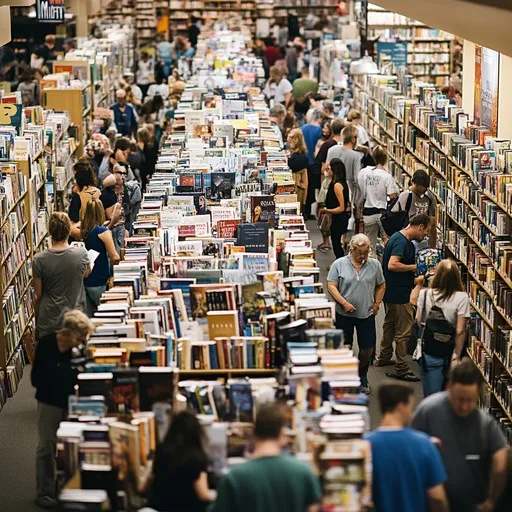
Photo: crowded bookstore bestseller table with stacked books, via images.stockcake.com
Walk into any Barnes & Noble in America and you'll play the same game: how many times can you spot the same cover before reaching the register? The smudged dagger. The red, white, and royal blue. The lighthouse, the lotus, the haunting of whatever. BookTok's winners have become wallpaper — printed by the million, tabled by default, memed into permanence.
Depending on who you ask, this is either the death of reading culture or its greatest renaissance in decades. The truth is messier, and honestly more fun.
The Case That We're All Reading the Same Thing
Start with the obvious problem. When forty million people funnel their attention through the same recommendation feed, the feedback loop is brutal. A book goes viral, it gets tabled, the table drives more sales, the sales drive more virality. Meanwhile, thousands of genuinely excellent books sell a few thousand copies and vanish from the conversation — not because they're worse, but because the algorithm never gave them the initial push.
The result is a strange flattening. Ask what "everyone's reading" and you'll get the same five answers, whether you're in Seattle or Atlanta. Backlist titles from years past keep outselling fresh releases. Publishing, ever allergic to risk, starts commissioning more of the thing that already worked. The monoculture doesn't just reflect taste; it starts manufacturing it.
The Case That Bookshelves Are Actually Widening
Here's the counterargument, and it's stronger than the doom-posters admit: the people buying those five viral books were, in many cases, not readers at all two years ago. BookTok pulled millions of Americans — disproportionately young, disproportionately people who'd been told reading wasn't for them — back into bookstores for the first time since high school.
And then something predictable happens. You come for the one book. You leave with three. One of those three is weird. It's by an author nobody's heard of, shelved face-out because a bookseller hand-sold it, and it becomes your book — the one you press into friends' hands with evangelical urgency.
Viral hits are gateway drugs, and gateways by definition lead somewhere else. Romance readers who started with one BookTok staple are now deep in subgenres with names like "monster romantasy" that didn't exist as categories five years ago. That's not narrowing. That's fractal expansion.
What the Monoculture Leaves Behind
Still, let's not romanticize. For every reader who wanders off the beaten path, plenty stay on it forever — not out of laziness, but because discovery has a cost. Time, money, decision fatigue. When the feed hands you a safe answer, taking it is rational.
The overlooked gems are the real casualty. Midlist literary fiction. Translated novels that never got a US marketing budget. The weird debut that came out the same week as a mega-bestseller and got steamrolled. These books aren't worse than the viral ones. They're just quieter, and quiet doesn't trend.
Can Curation Push Back?
This is where it gets interesting for anyone who builds or uses recommendation tools. The viral feed optimizes for popularity — it shows you what's already winning. But there's a different question an algorithm can ask: not "what's popular?" but "what's popular with people whose taste overlaps with yours?"
That's the difference between a monoculture and a thousand overlapping micro-cultures. A good recommendation engine doesn't have to hand you the dagger book again. It can surface the 2019 novel that three readers with your exact reading DNA adored and nobody else noticed. Discovery tools that weight for fit rather than volume could quietly become the corrective to feed-driven sameness — less a replacement for BookTok, more a counterweight.
Read the Table, Then Walk Past It
None of this means you should feel bad about loving the big five. If a book brought you back to reading, it did its job, full stop. But the healthiest version of this moment is the one where the viral hit is the doorway, not the destination.
So here's the modest proposal: for every BookTok staple on your shelf, buy one book you've never seen on a table. Ask a bookseller what they're hand-selling. Let a recommendation tool built on your taste — not the crowd's — pick something. The monoculture only wins if the doorway stays shut behind you.